
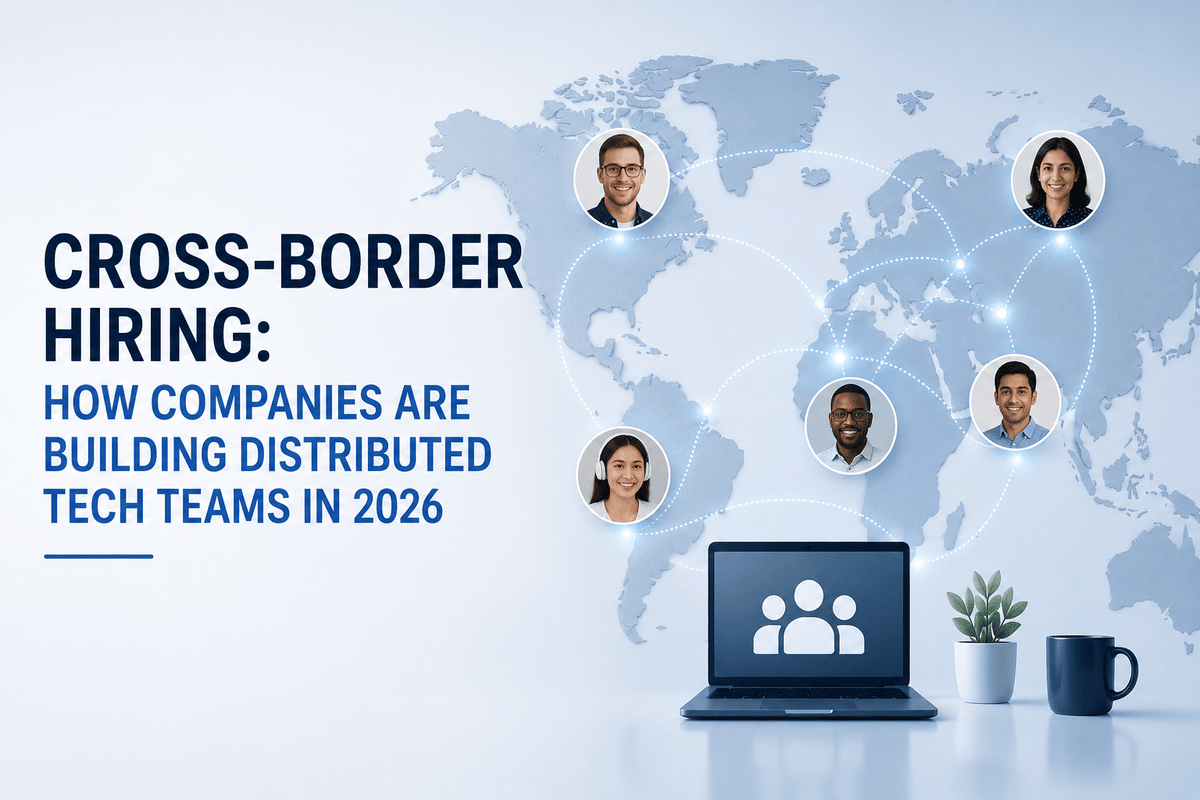
A decade ago, hiring a software engineer in another country was something only large multinational companies could afford. Today, it has become a practical strategy for businesses of all sizes looking to access specialized talent. As technology teams become more distributed, companies are discovering that successful hiring is no longer limited by geography. Instead, it depends on having the right processes, compliance framework, and collaboration strategy in place.
Several factors have accelerated the growth of distributed hiring.
Remote work has become a standard way of operating for many technology teams, giving organizations the flexibility to recruit beyond their local markets. At the same time, competition for experienced software engineers, cybersecurity specialists, cloud professionals, and data experts has encouraged employers to search globally.
Modern hiring solutions have also simplified international recruitment by making payroll, contracts, tax management, and compliance more accessible than ever before.
The result is a global talent market where the best candidate for a role may be located anywhere in the world.
Establishing a legal entity remains the preferred option for organizations planning a long term presence in a particular country. While this approach provides full operational control, it also requires significant legal, financial, and administrative investment.
For many companies, an Employer of Record offers a faster and more flexible alternative. The EOR manages employment contracts, payroll, tax obligations, and statutory benefits while the hiring organization retains responsibility for day to day management. This allows businesses to hire internationally without establishing a local entity.
Hiring independent contractors is common for project based work, but organizations should carefully evaluate local employment regulations. Misclassifying workers can create legal and financial risks, making it important to understand the distinction between contractors and employees in each country.
Hiring internationally is only the first step. Building an effective distributed team requires thoughtful planning and consistent management.
Not every meeting needs to happen in real time. Organizations should identify which activities require live collaboration and which can be handled asynchronously through documentation and collaboration tools.
Employment laws, leave policies, notice periods, and workplace expectations differ between countries. Understanding these differences helps managers create better employee experiences while remaining compliant.
Remote employees should feel connected to the wider organization. Regular communication, virtual meetings, and occasional in person gatherings help strengthen collaboration and company culture.
Whether compensation is standardized globally or adjusted for local markets, communicating how pay decisions are made builds trust and improves employee satisfaction.
Organizations often encounter challenges when they:
Treat contractor agreements as a substitute for employment without understanding legal implications.
Overlook local employment requirements before making offers.
Ignore time zone differences when planning collaboration.
Apply the same compensation model everywhere without considering local market conditions.
Assume compliance ends once payroll is established instead of monitoring ongoing regulatory changes.
Cross border hiring has become a practical strategy for accessing specialized technology talent.
Employer of Record services simplify compliant international hiring.
Contractor classification should be carefully evaluated to avoid legal risks.
Successful distributed teams require strong communication, collaboration, and cultural connection.
Transparent hiring and compensation practices improve employee trust and long term success.
Cross border hiring is no longer limited to large enterprises. With the right hiring strategy, compliance framework, and collaboration practices, organizations can build high performing distributed technology teams regardless of location.
While hiring infrastructure has become more accessible, long term success depends on how effectively companies support and manage their distributed workforce.
Coolbuffs helps employers connect with skilled technology professionals, making it easier to discover qualified talent and build distributed teams that support long term business growth.
By Entering your email address, you are agreeing to receive marketing emails from Coolbuffs Job Portal. You will receive the latest information about portal. Subscribe to receive our offers in preview.
Comments